There is a small moment at the end of the day when your keys finally have somewhere to land. What if the tray beneath them carried a technique once used to dress a doll?
That is one way to encounter kimekomi. The close-fitting edge of patterned fabric tells a story of skilled hands, yet the object belongs on an entryway table, not behind glass. Here is how an Edo doll-making technique found a place in contemporary Japanese homeware—and in a new kind of good-luck gift.
What is Edo kimekomi?
In kimekomi doll-making, the maker carves narrow grooves into a shaped body and tucks fabric into them. The cloth lies against the form to create the doll’s clothing; the crisp boundaries of the pattern are part of the skill.
According to the Tokyo Metropolitan Government’s account of Edo kimekomi dolls, the technique originated in Kyoto in the 18th century and later became part of the doll-making tradition in Edo, now Tokyo. Makers have also adapted it to interiors and smaller objects.
There is a useful distinction: “Edo kimekomi dolls” names a designated traditional craft. A tray made using the technique is a contemporary application of that craft, not necessarily a designated doll itself.
A doll-making technique becomes a place for everyday things
Kakinuma Ningyo takes the fabric-setting skill learned through doll-making and applies it to the flat surface of a tray. A watch, a ring or a set of keys can live there; when the tray is empty, it can also be displayed upright.
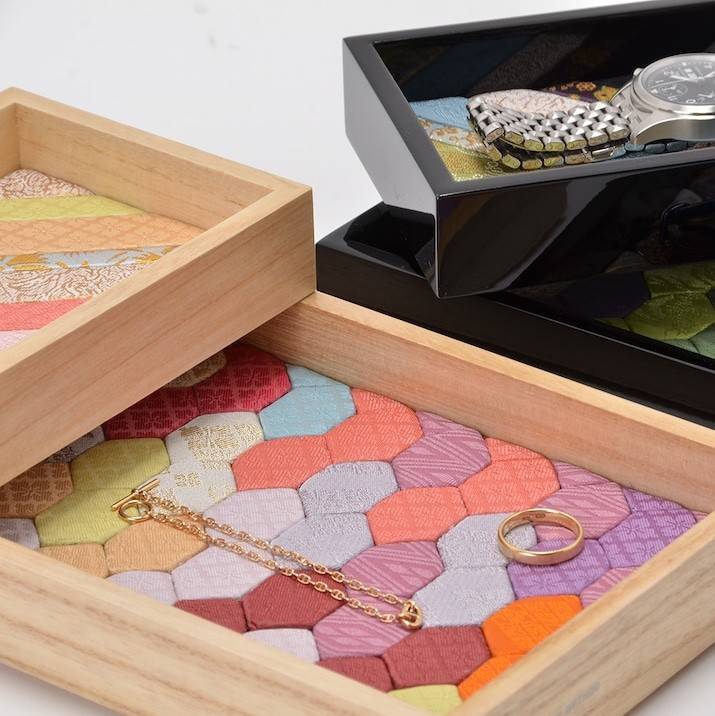
The point is not to redesign your room around an heirloom. It is to notice where a thoughtfully made object could fit a habit you already have. For dimensions and finishes, see the small Edo kimekomi tray by Kakinuma Ningyo.
A beckoning cat shaped by students and artisans
A maneki-neko is a beckoning cat often associated with good fortune. KURASHiNO Wa’s “En” cat gives that familiar form another layer of meaning: students brought their ideas into conversation with the artisans of Kakinuma Ningyo, who made the piece using kimekomi techniques.
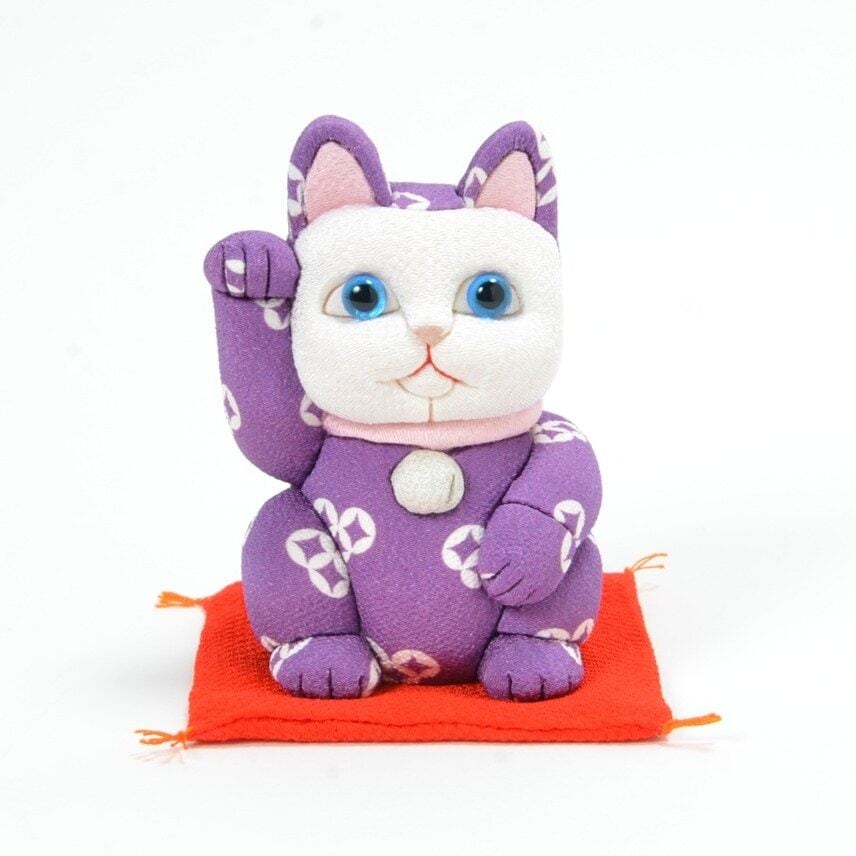
Three linked-circle shippō motifs express the brand’s wish for connections to continue. At about 13 cm tall, the cat can sit on a shelf or desk without demanding a whole room’s attention. It shows how a tradition can move forward when a younger generation helps imagine its next form. The story and details of “En” are available in the shop.
How to choose one as a gift
Start with the recipient’s space, not the craft label. Someone who likes a clear place for small essentials may enjoy the tray; someone beginning a job, moving home or opening a business might appreciate the cat and its wish for new connections. A short note explaining why you chose it can mean more than a long lesson in craft history.
For other ways to match an object to a person, read our guide to Japanese artisan gifts for everyday life. If the occasion is a move, there are more ideas in Japanese housewarming gifts. Both pieces featured here come with information in English; check the current product page for shipping and gift-presentation details before ordering.
Making room for the next life of a craft
What travels from doll to tray to beckoning cat is not a fixed shape. It is a precise way of working with fabric, and the care to find it a meaningful use now. KURASHiNO Wa brings artisan skill, a maker’s story and the rhythms of modern life together—so a gift can feel considered, and an everyday object can invite a second look.