A small Japanese plate can be easy to admire and harder to put to use. What should you serve on it? Start with food you already enjoy rather than planning a special meal around a new piece of tableware.
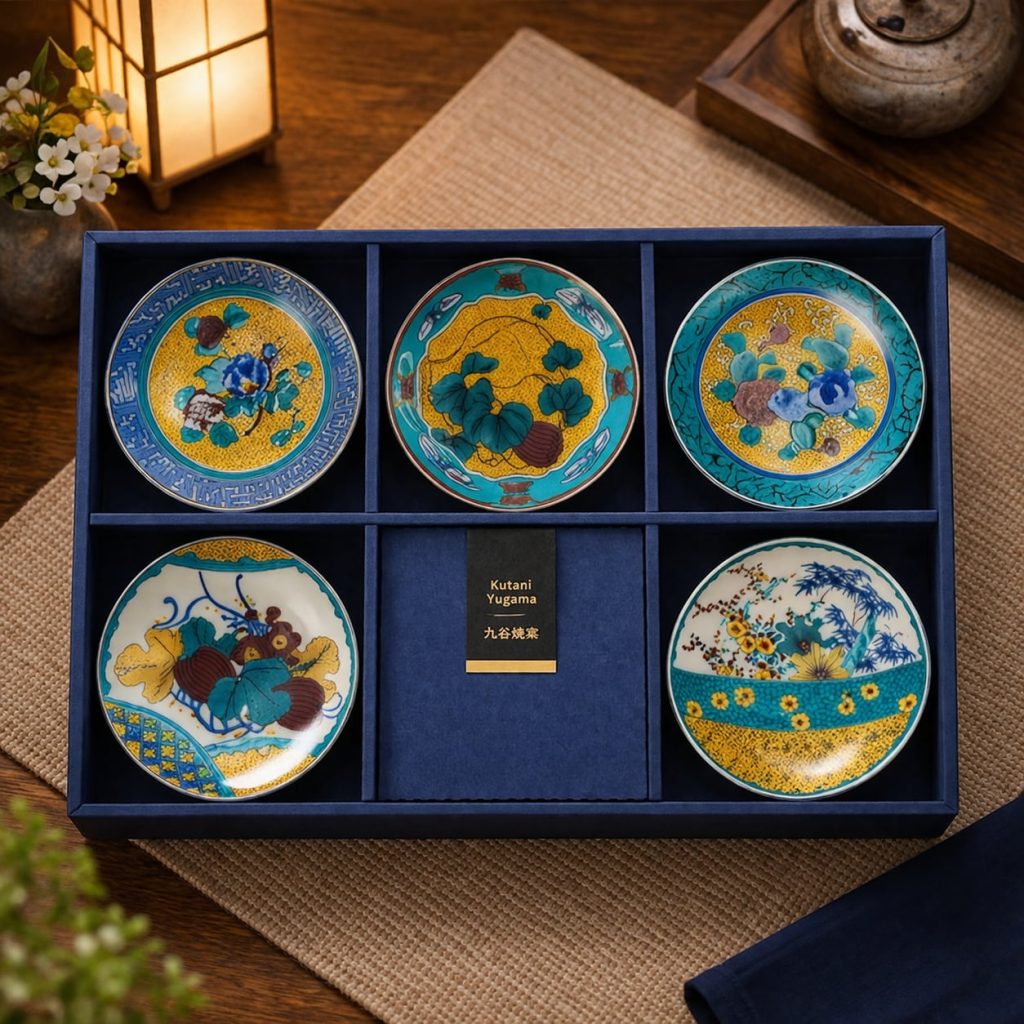
This guide offers ideas for side dishes, snacks and sweets, then looks at a Kutani small-plate set available from KURASHiNO和. The serving suggestions are ideas to adapt; product-specific instructions should guide how you use each piece.
Give a small portion its own space
Small plates, often called mamezara in Japanese, are useful when you want to keep a little food separate from the rest of a meal. You might serve a side dish beside a larger dinner plate or set out a small sweet after eating.
- Side dishes: try a small portion of pickles or a prepared vegetable dish.
- Snacks: serve a few nuts or a small savoury bite.
- Sweets: give a small Japanese sweet or a bite-sized dessert a plate of its own.
You do not need a permanent assignment for each plate. Choose one use that suits your routine and let other possibilities follow. A piece that comes out regularly can become part of the table you already have.
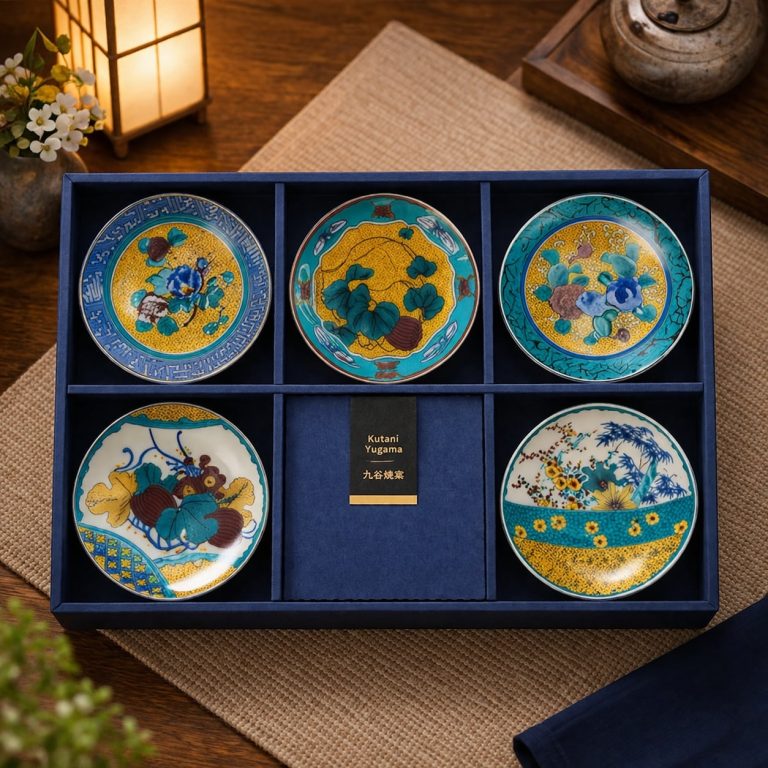
Let the pattern share the plate
When a plate has a decorative design, leaving a little space around the food can make the pattern part of the setting. Try a few arrangements and see what feels natural on your table.
If several plates have different designs, a shared element can help you arrange them. Serve a similar amount on each, or divide the same type of snack between them. You can also put one patterned plate beside plain tableware rather than building a whole matching set.
Check measurements rather than judging from a photograph
The Kutani set of five small plates lists a diameter of approximately 116 mm and a height of approximately 15 mm. Compare those measurements with a plate you already own to picture how much space you will have.
The set is made by Kutani Yui Kiln in Kaga, Ishikawa Prefecture. The listing suggests uses including side dishes, snacks and Japanese sweets. It also notes that some designs included in the set may change. If a particular pattern is central to your choice, ask the shop to confirm it before ordering.
Confirm appliance and cleaning guidance separately
Do not assume that a ceramic plate is suitable for a microwave, dishwasher or oven. Check the instructions for the individual product. Ask the seller about any intended use that is not covered by the product guidance.
Make the questions relevant to your home. Do you usually wash everything in a dishwasher? Do you want to reheat food on the plate? Is storage space limited? Working backwards from those habits is more useful than choosing on appearance alone.
Start with the next snack, not a new lifestyle
Using Japanese craft at home does not require a different menu or a carefully styled room. Put a familiar snack on a small plate and see how it works with the pieces around it. That is enough for a first step.
If you are choosing for someone else, our guide to Japanese artisan gifts for everyday life starts with the recipient’s routine. The same approach works when you are buying for yourself.
Product source: KURASHiNO和’s official Kutani small-plate listing. Dimensions and the note about changing designs were checked on 17 October 2026.