White bubbles suspended in blue glass; clear glass with an uneven, light-catching surface. These details can be the first things you notice about Ryukyu glass. But what should you look for when choosing a piece, and how closely will it match the photograph?
This guide looks at two recycled-glass pieces by GLASSSEN, a workshop in Okinawa, Japan. It focuses on their appearance, everyday uses and the individual variations described in the product listings, rather than treating all Ryukyu glass as a single material or manufacturing process.
Look at how the bubbles gather
Try looking at one area of a product photograph at a time. Are there clusters of small bubbles, larger bubbles that stand out, or clear spaces between them? Following those changes can help you identify what draws you to a particular design.
The two GLASSSEN listings describe differences in bubbles, surface texture, colour and shape between individual pieces. A photograph is a useful reference for the design, while the notes on variation help set expectations for the item you receive.
Blue glass for the table: the Chiisana Chikyu sake set
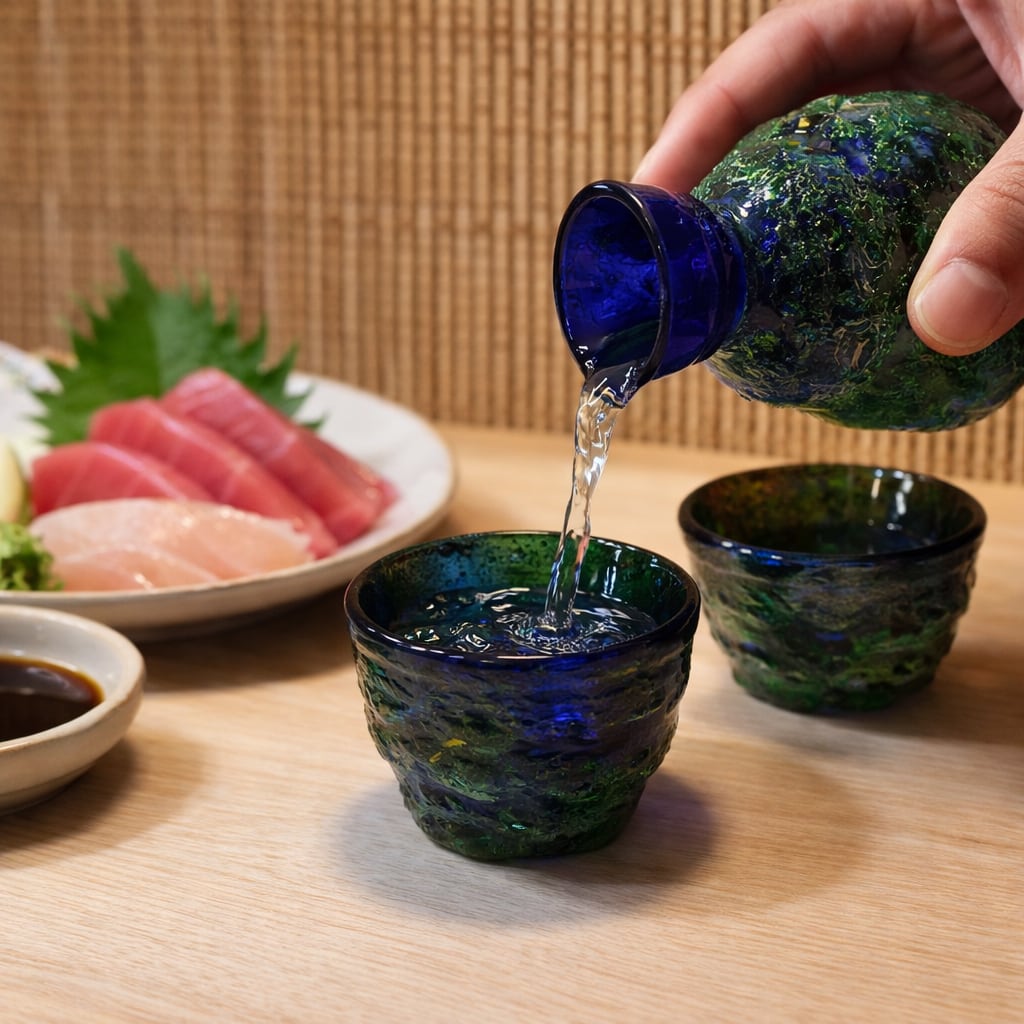
The Chiisana Chikyu recycled-glass sake set—its name means “small Earth”—includes one tokkuri, a sake carafe, and one guinomi, a small sake cup. Blue and green shades overlap with white bubbles, giving the set a landscape-like appearance.
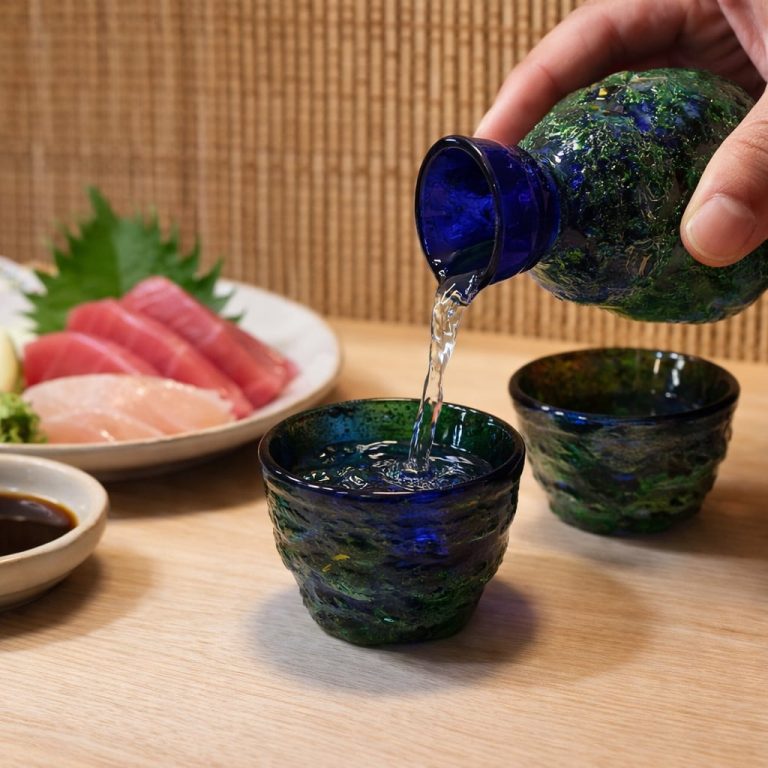
Picture the cup beside a small dish at dinner. Before filling it, take a moment to look at the blue where the light passes through. Enjoying the glass need not require a formal table setting or a special occasion.
The listing suggests cold sake, water or cold tea in the carafe, and small portions of food in the cup. Choose a use that fits your routine, and check the product’s separate instructions for heating and cleaning.
Clear glass and texture: the Unryu bud vase
The Unryu recycled-glass bud vase has a different emphasis: bold bubble decoration around the glass, with transparent areas between the textured forms. Its name evokes drifting clouds.
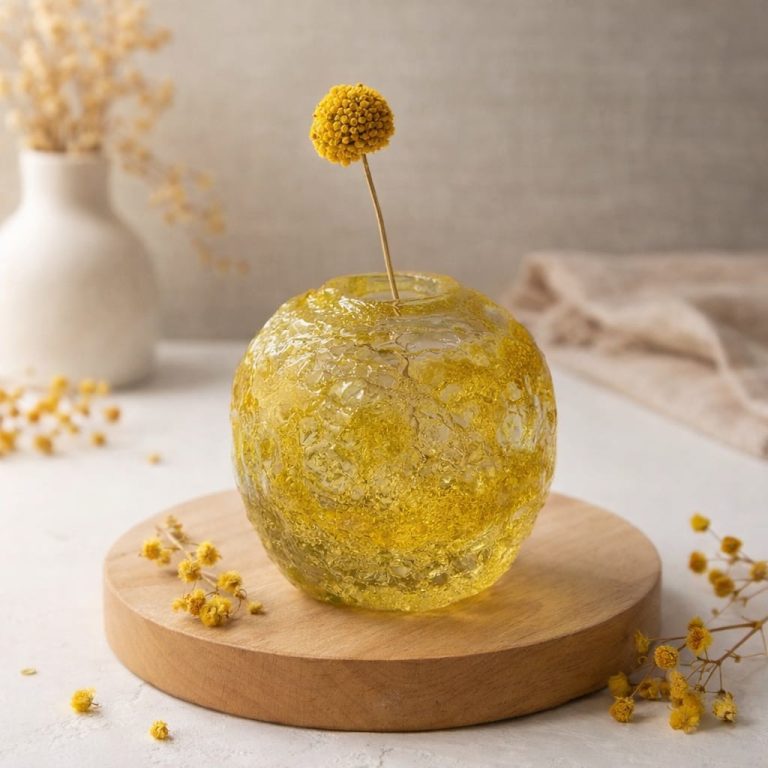
Imagine it against a pale wall, then against a darker shelf. Which setting would let you enjoy the details that caught your eye? Start with one stem if you like arranging flowers, or consider a place where you would enjoy looking at the vase when it is empty.
Read the story of the particular piece
Both products are made by GLASSSEN in Okinawa. The official listings describe the workshop’s use of previously used glass and the making of individual pieces by hand.
That background is a starting point for understanding these objects. The labels “recycled glass” and “Ryukyu glass” alone do not establish the exact process used to create every bubble or colour in every product. Read the information for the piece you are considering.
Three checks before buying or gifting
- Individual variation: read the notes about bubbles, colour and shape. If a specific appearance matters to you, ask the shop before ordering.
- A place in the recipient’s life: a sake set might suit someone who enjoys an evening drink; a vase might suit someone who likes flowers or small objects for the home.
- Size and care: check dimensions, intended use and handling guidance. Do not infer heat resistance, microwave safety or dishwasher suitability from the appearance of the glass.
Appreciating variation does not mean overlooking damage. If you have concerns about the condition of an item on arrival, follow the seller’s guidance and contact the shop.
Begin with the detail you like—blue colour, clear glass or the layering of bubbles—then imagine where the piece would be used. For other ways to choose a useful gift, explore our guide to Japanese artisan gifts for everyday life.
Product references: the official KURASHiNO和 listings for Chiisana Chikyu and Unryu, checked 17 October 2026.