A handmade cup can feel right for an ordinary morning. Then comes the practical question: can it go in the microwave, and how should you wash it after breakfast?
There is no single care rule for Japanese crafts. A ceramic piece and a hand-dyed textile can ask for very different routines. Looking at two pieces in the KURASHiNO Wa collection, here is a more useful way to choose something you will actually use.
Think beyond the moment you bring it home
Picture a place for the object in your day: a cup at breakfast, a coaster beside an afternoon tea. Then picture what happens afterwards. Will you wash it, dry it and put it away in a way that fits your routine?
That small question matters more than whether a craft looks “traditional.” Care instructions belong to the individual piece. Material names alone cannot tell you whether it is microwave safe or how its colours should be washed.
For pottery, check the instructions for the particular piece
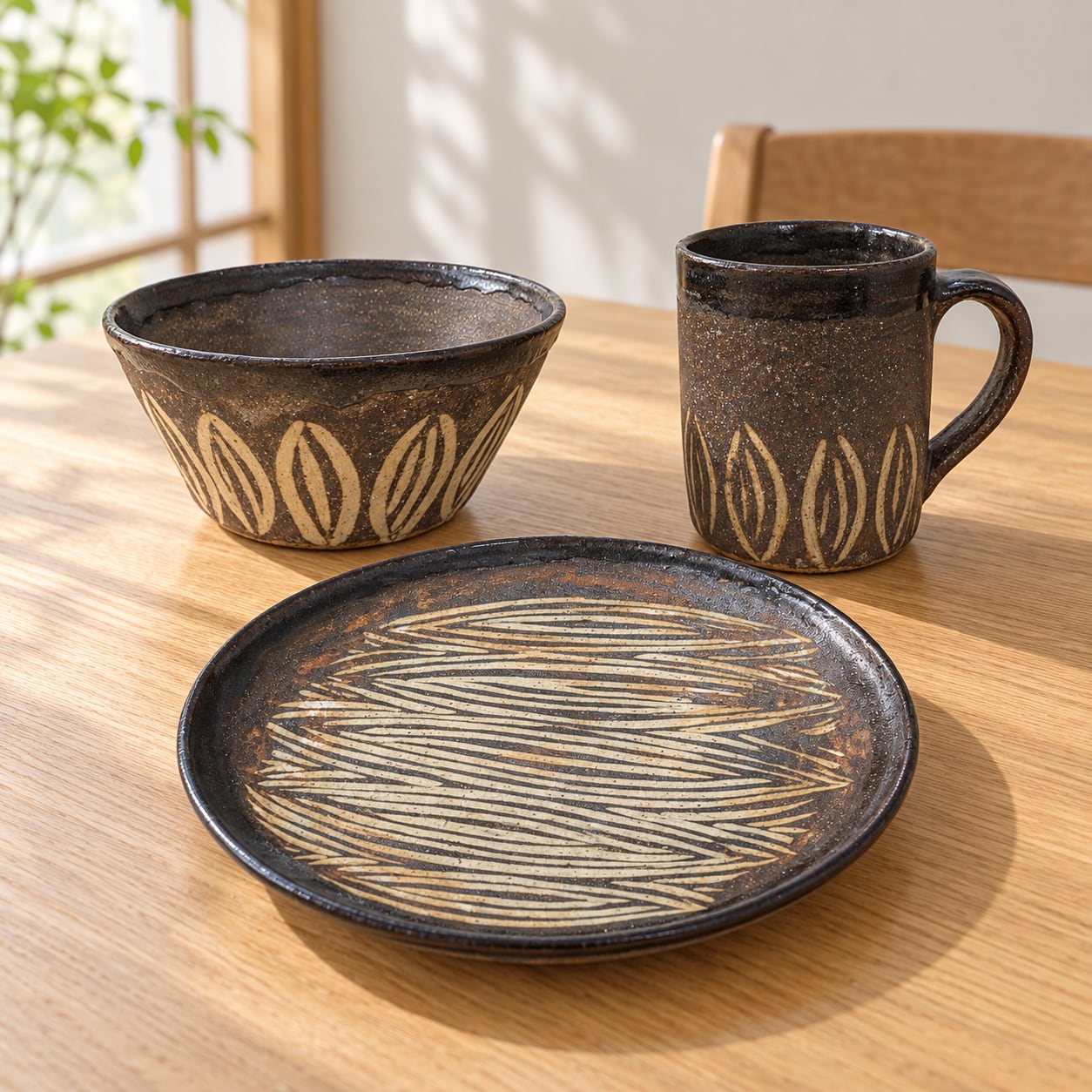
KURASHiNO Wa’s Mashiko ware tableware set brings together a plate, a small bowl and a mug for different meals through the day. It was developed with Mashiko potter Kei Ishikawa. The surface uses zōgan, an inlay technique in which coloured clay fills marks cut into the ceramic body.
The product instructions say this particular set can be used in a microwave and oven. They recommend washing it by hand to avoid chips and scratches when pieces touch in a dishwasher, drying it thoroughly before storage, and avoiding sudden temperature changes.
Those instructions describe this set; they are not a rule for all Japanese pottery. If another cup catches your eye, read its own care information before deciding where it fits in your kitchen.
With dyed cloth, hand washing may be the wrong assumption
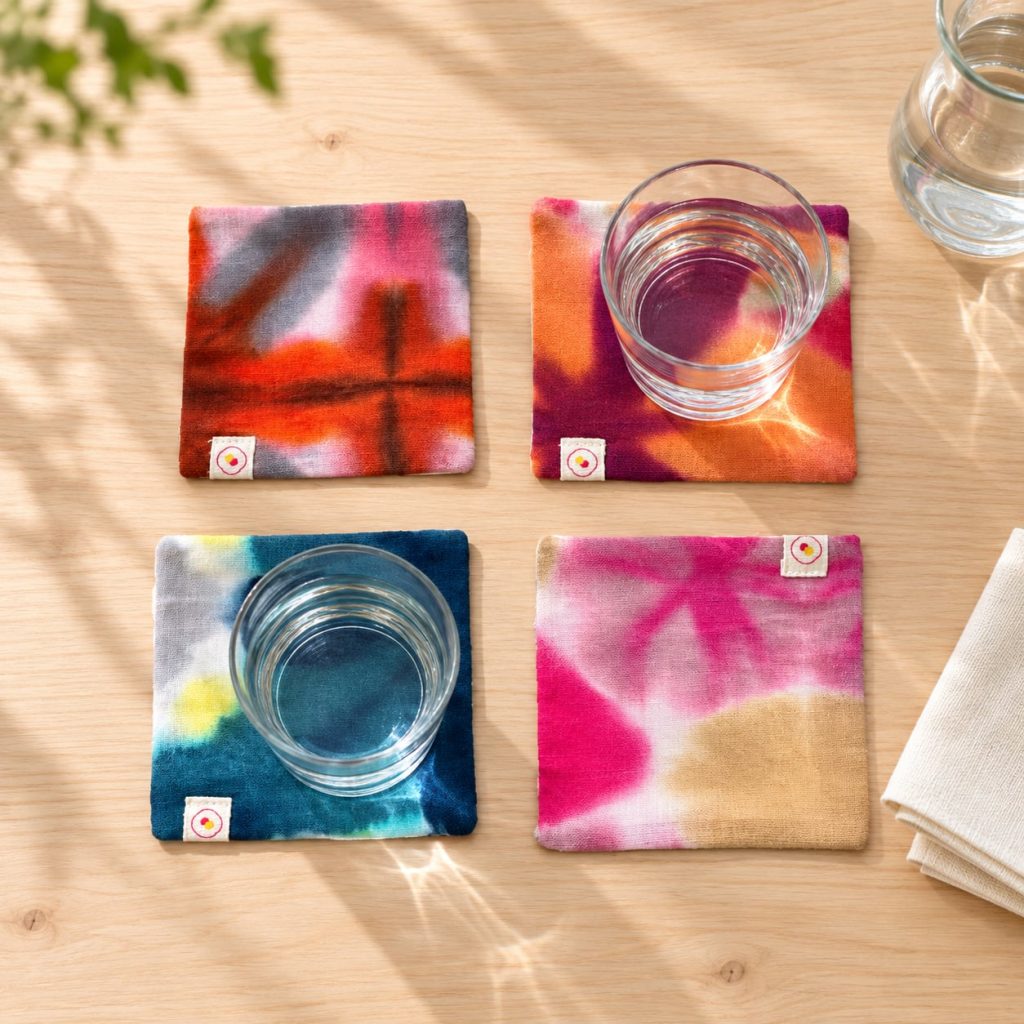
The Ise cotton coaster set includes four seasonal patterns dyed by Mari Momen. Slight differences in colour and pattern are part of what makes each piece distinct, while its small size makes it easy to bring into a daily tea ritual.
Its care instructions are unusually specific: use a laundry net and a washing machine, wash the coasters separately at first, and avoid hand washing or soaking because of possible colour transfer. “Hand-dyed” does not automatically mean “hand-wash only.” The maker’s guidance is the better starting point.
Choosing a gift means considering the recipient’s routine
Does the recipient rely on a dishwasher? Will a small textile be easy for them to wash? A gift becomes more thoughtful when you consider the work of living with it, as well as its colour and story.
Check dimensions, materials and care instructions on the product page. For a gift crossing borders, also check shipping and delivery terms at checkout rather than assuming every item can be sent to the same destination. A short note about why you chose the piece can help its story travel with it.
Craftsmanship belongs in the life around it
KURASHiNO Wa connects the skills of Japanese artisans with the rhythms of contemporary homes. Developing the Mashiko set with its maker meant thinking about when and how the pieces would be used. Respect for a craft can be expressed through using it well, following its care guidance and making room for it in ordinary life.
For a broader introduction, read how to bring Japanese craft into everyday life. If you are choosing for someone else, our guide to Japanese artisan gifts offers another starting point.
The next time a handmade piece catches your eye, look for its care instructions. They may tell you exactly how it could become part of your day.