
Hi, I’m NOWA, your guide to KURASHiNO和.
A thank-you gift can begin with a simple question: what would make this person’s tea break nicer? Let’s consider seven possibilities, from something to enjoy today to a small object for everyday use.
- 1Picture the person
Start with their habits and preferences.
- 2Imagine daily use
Consider space, effort and care.
- 3Check the details
Read the current item and delivery information.
Seven editorial ideas, chosen by the way they will be used
This is an idea list, not a sales or popularity ranking. The first six are general gift categories rather than specific product recommendations. Check a local seller’s current details and choose an option that suits your budget and recipient.
1 | Tea in a style they already enjoy
Choose loose leaves for someone with the equipment, or tea bags for convenience. Check preferences for flavour and caffeine rather than assuming everyone enjoys the same blend.
2 | Individually wrapped biscuits
A practical option for short breaks or sharing. Check allergens, shelf life and pack size, so the gift is easy to finish.
3 | Japanese sweets
For someone who enjoys sweet bean flavours, yokan or monaka could be a starting point. Fresh sweets need extra attention to storage and the date you can hand them over.
4 | A small everyday towel
A useful alternative to food. Consider texture, washing instructions and colours they use. Avoid strong fragrances unless you know their preferences.
5 | Flowers that fit their space
Think about size, a suitable vase and the care involved. For a home with pets, ask the florist about appropriate varieties.
6 | Time together at a café
For someone who prefers not to accumulate things, an invitation can be personal. Agree on a convenient time and place, and check any booking conditions.
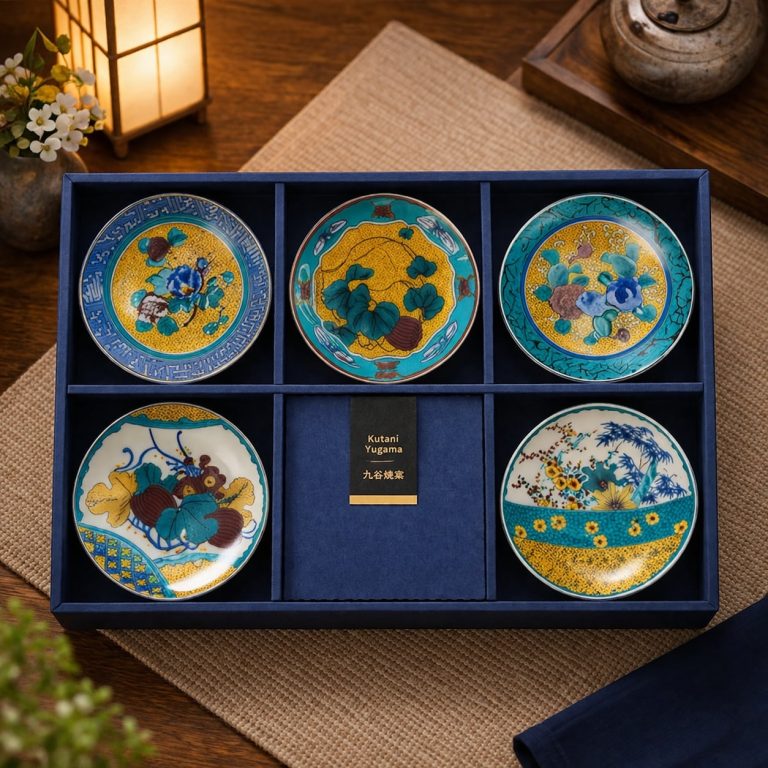
7 | A handcrafted small plate
For someone who enjoys tableware and is comfortable with its care. Consider cupboard space, everyday use and whether a single piece or a set suits them. Mashiko pottery is one craft example.
Start with the recipient’s daily routine
Does the person like to enjoy a biscuit or wagashi with afternoon tea? Do they often welcome family and friends? Small serving plates are useful for individual portions, and a set offers flexibility for different snacks and guests. Think about whether the recipient prefers practical tableware or little objects that also look beautiful on a shelf.
A closer look at Mashiko pottery
The Mashiko pottery set of three inlaid sweet plates available from KURASHiNO和 is made by Kei Ishikawa of Nansogama. Each plate has a different design. The maker uses zōgan, an inlay technique in which a pattern is carved into the clay surface and filled with white clay. The result is both decorative and quietly suited to daily life.
Although intended for sweets, the plates can also be used for small side dishes or as trays for rings and other accessories, as described on the product page. That versatility makes them easier to match with someone’s habits.
Three things to check before giving tableware
- Everyday use: Consider how many people the recipient normally serves and whether a small plate would suit their favourite treats.
- Care: The shop recommends handwashing and avoiding sudden temperature changes. Handcrafted pottery may show small variations in shape and finish.
- Order details: Check the shop’s current availability, delivery information and gift-wrapping options before placing an order. Do not assume a particular arrival date.
Make a small gift personal
A short note explaining why the plates reminded you of the recipient can make a practical present feel more meaningful. Rather than choosing by decoration alone, picture the moments in which the plates will be used.
See the actual plate set, photos and product specifications.
For other ideas, explore our guide to everyday Japanese artisan gifts.