
Hi, I’m NOWA, your guide to KURASHiNO和.
Love the look of patterned plates, but unsure where to start? Let’s explore colour, pattern and the dishes you already own. Yoshidaya-style Kutani offers a useful example—and you don’t need to be a ceramics expert to enjoy it.
What Does “Yoshidaya Style” Tell You About a Plate?
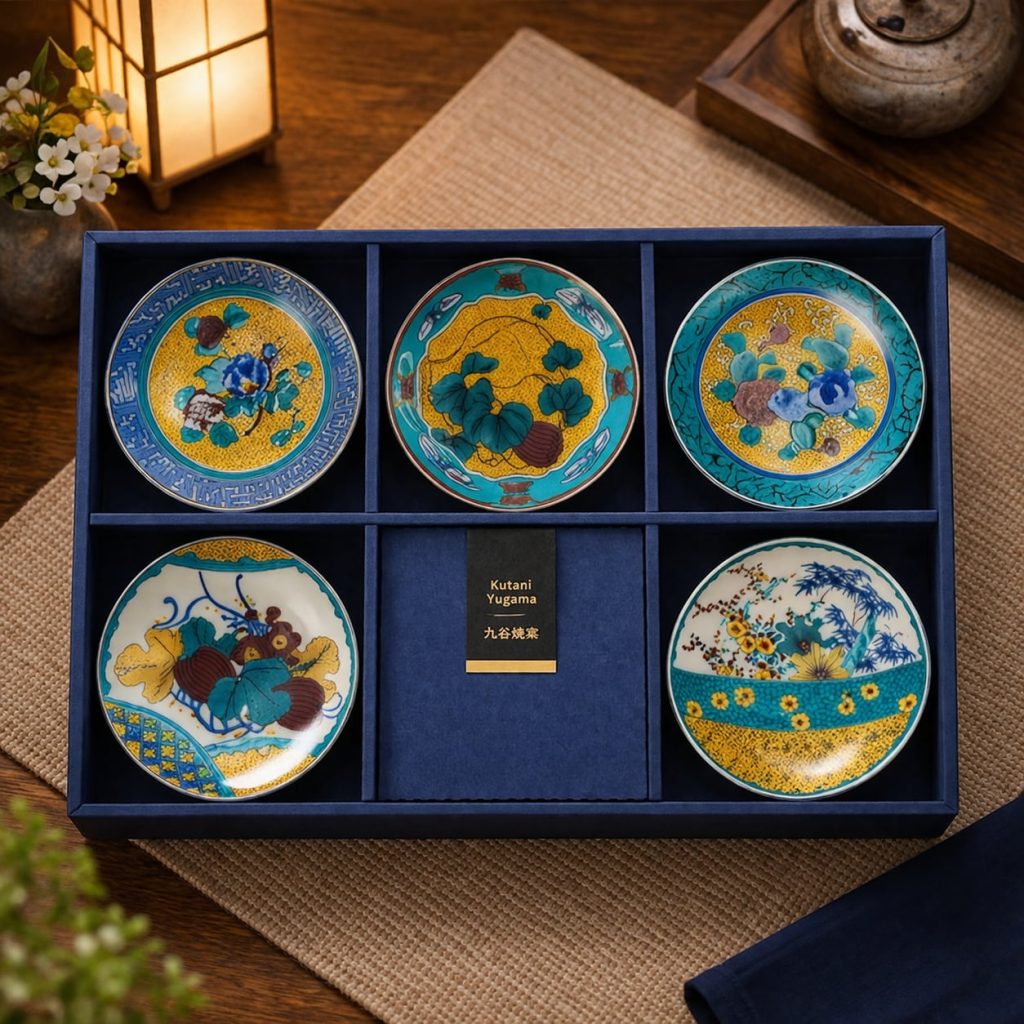
When browsing Japanese ceramics, you may encounter the term “Yoshidaya style.” It offers a starting point for looking at colour and decoration. Using Kutani Yuigama’s set of five small plates as an example, this guide explains how to approach the term when choosing contemporary tableware.
A Historical Painting Style, Interpreted Today
The Ishikawa Kutani ceramics industry association describes Yoshidaya decoration as using green, yellow, purple and deep blue, without red. Colour covers much of the surface, with detailed background patterns contributing to a rich, substantial appearance.
On a contemporary product, “Yoshidaya style” describes a design influenced by this tradition. It does not mean the plate is an antique made at the historical Yoshidaya kiln, nor does it establish a particular production method. Check the maker and specifications of the actual item.
Three Ways to Look at the Decoration
1. Notice the Relationships Between Colours
Start with the combinations you enjoy. Which areas appear bright, and which feel quieter? Learning a style name can help you explore, but you do not need to memorise ceramic history before choosing a plate you like.
2. Look Beyond the Main Motif
The Yuigama set features designs inspired by nature, plants and animals. Compare the central motifs with the borders and surrounding patterns. Looking at these differences together can also give guests something to talk about around the table.
3. Compare It with Your Existing Tableware
Try imagining a patterned plate beside a plain dish you already own. This makes it easier to judge how much colour you want to add. Consider the available space as well as the photographs. For serving ideas, see our guide to using Japanese small plates.
A Style Name Does Not Mean Every Design Is Hand-Painted
Kutani Yuigama works with traditional techniques while also exploring methods including three-dimensional technology and overglaze transfers. Avoid assuming that every motif on a Yoshidaya-style product is painted by hand. If the production method matters to your choice, ask the seller about the specific item.
What to Check Before Buying
- Confirm that the dimensions suit your intended space and use.
- Check the current assortment: some designs in the set may change with the timing of your order.
- Consult the item’s care instructions before using a microwave or dishwasher.
For current pricing, availability, wrapping and delivery details, visit the official product page in Japanese. Understanding the style can enrich your choice, while your own response to the colours and patterns remains a useful place to begin.
References: the Ishikawa Kutani ceramics industry association’s introduction to Kutani ware; Kutani Yuigama’s product information; KURASHiNO Wa’s product listing. Checked October 28, 2026.