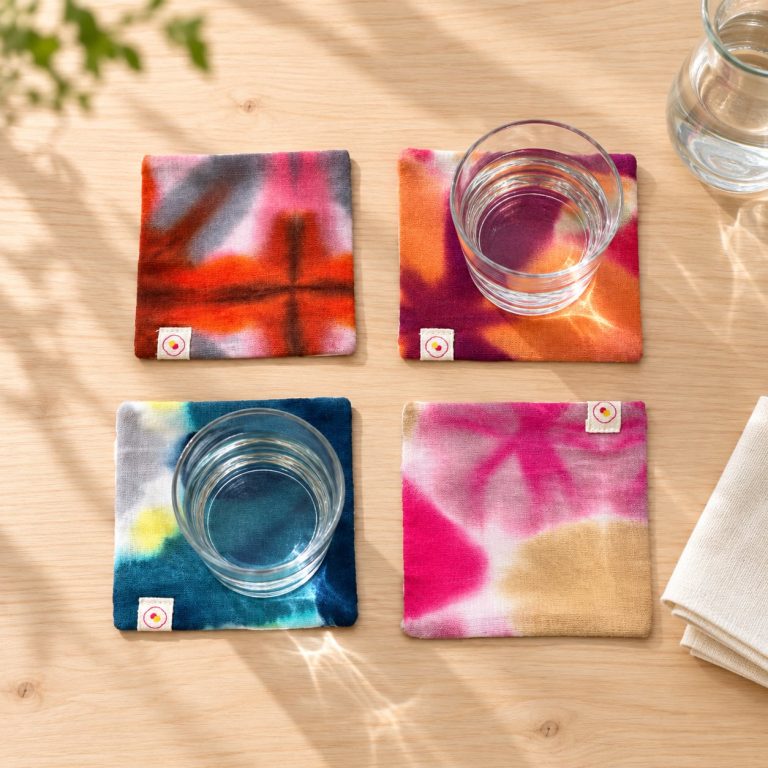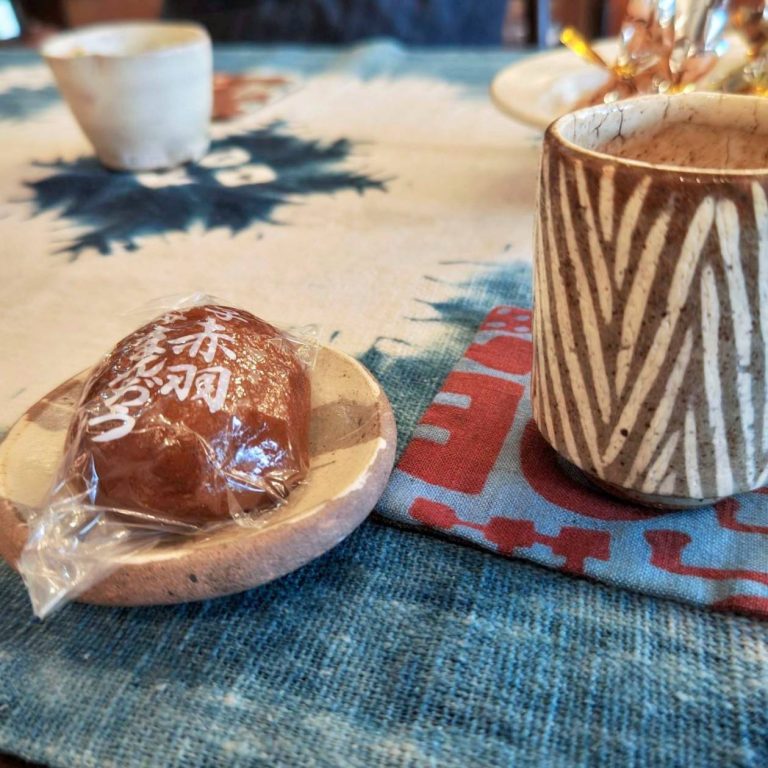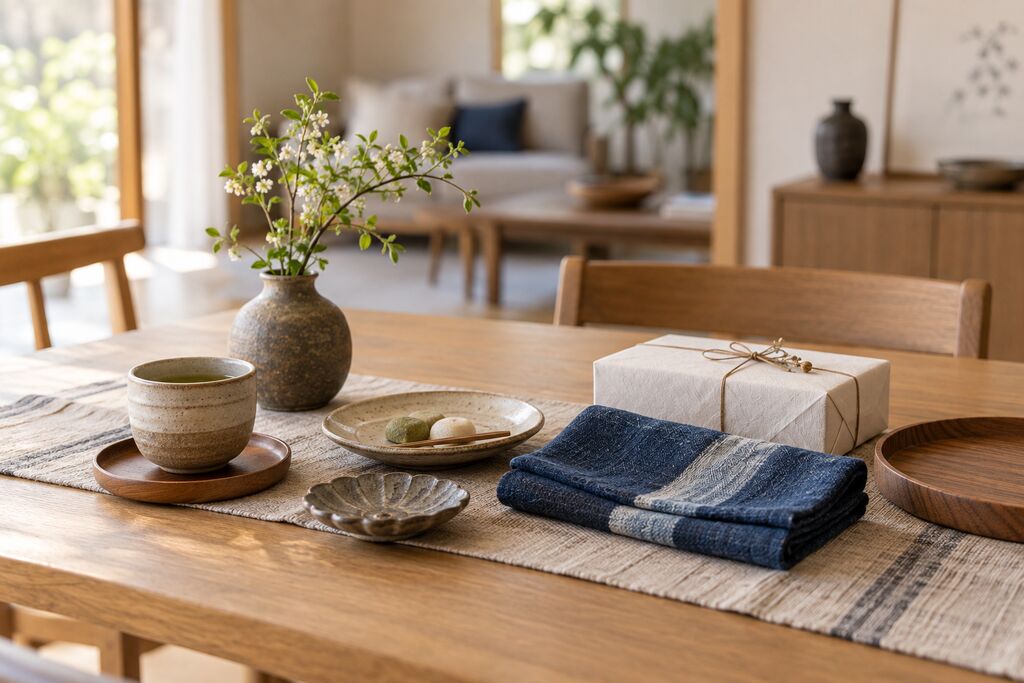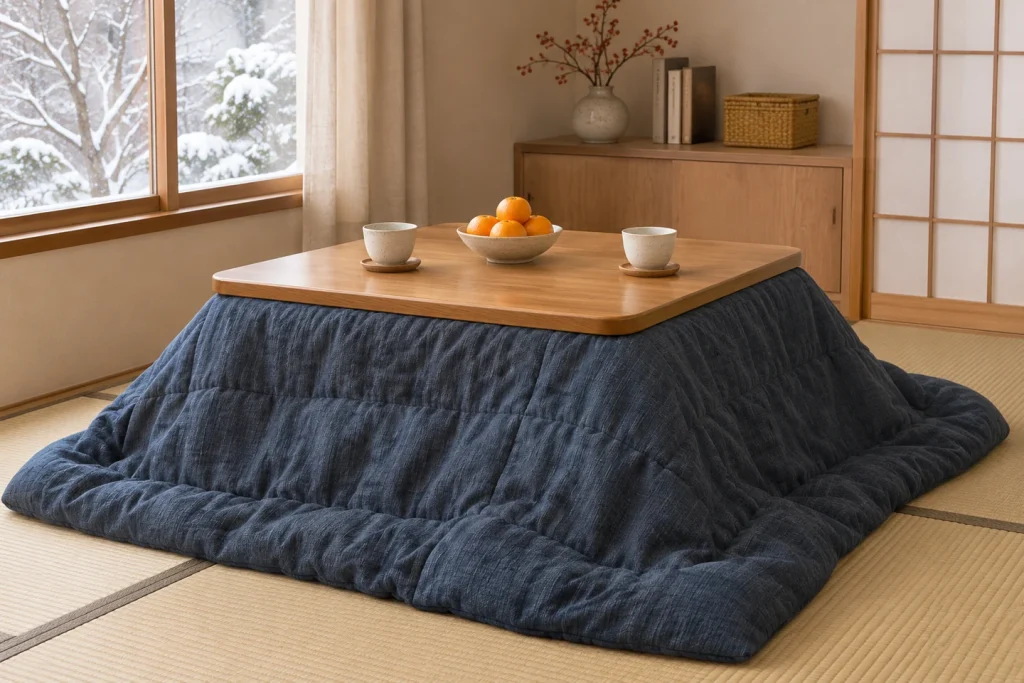
The cups sit on a wooden tabletop. Below them, a thick quilt falls almost to the floor. Someone has apparently dressed the table for winter.
A kotatsu is a heated table arranged to keep your lower body warm while you sit beside it. In a common modern version, an electric heater is fixed beneath the table frame and a quilt holds warmth around your legs. The removable top rests over the quilt, leaving a firm surface for tea, a book or a bowl of mandarins. Once you see the layers, the blanket makes sense.
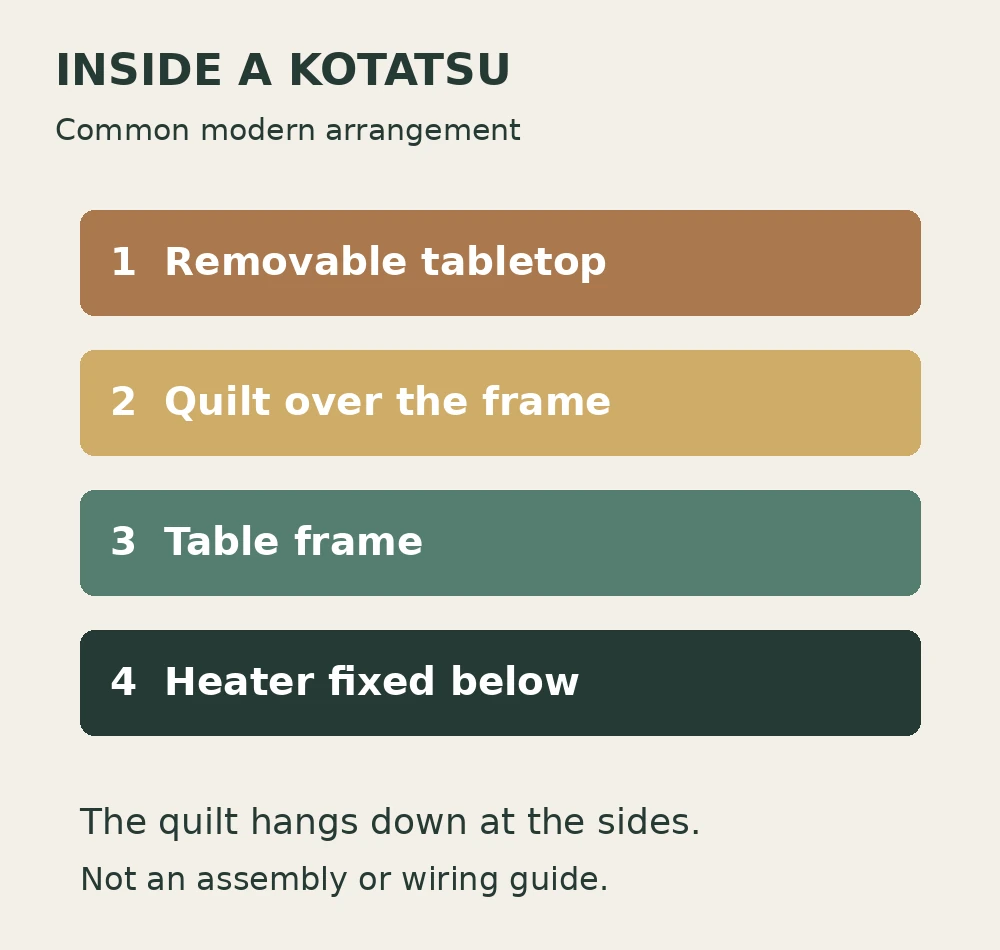
The four parts of a typical kotatsu
Start at the top and work down. There is a tabletop, then a quilt, then the supporting table frame, with a heater mounted underneath. The quilt spreads over the frame and hangs down around its edges. It does not lie over the cups and plates.
That arrangement separates two jobs: the top remains useful as a table, while the quilt encloses a smaller warm space below. You sit outside the frame and tuck your legs beneath the edge of the quilt. A low model is generally paired with floor seating; higher dining-style versions also exist. The right choice depends on how comfortably you can sit down and get up.
Why warm the table rather than the whole room?
The kotatsu belongs to a history of heating people and particular places within a home. A JICA introduction to winter life in Japan explains this background in relation to traditional housing and localised heating. A quilt around the lower body reduces the amount of warm air escaping directly into the room.
That does not mean every Japanese home is cold or that every household owns a kotatsu. Housing, climate and heating systems vary considerably. Nor is a warm space beneath the quilt a substitute for keeping the rest of the room appropriately comfortable.
It does change how a room is used. A table that was somewhere to put a cup can become the place where people choose to sit for a while. Arrange a clear route around it, and put the things you actually need within easy reach. The practical pleasure is being settled without having to pile every object on the tabletop.
From a charcoal brazier to an electric heater
The blanket-covered form predates electricity. The Ono municipal museum’s collection note describes an older kotatsu using a charcoal brazier, a wooden frame and a covering quilt. It also records the later shift towards other heat sources, including electricity.
That older object helps explain the form, not how to improvise one at home. A modern electric kotatsu is an appliance with specified parts and operating instructions. A table with an ordinary portable heater pushed underneath is not an equivalent arrangement.
Tea, mandarins and somewhere to linger
Mikan, the small easy-peel mandarins associated with Japanese winter, make a familiar companion to the kotatsu. JICA’s winter-life guide mentions the pairing. The appeal is quite practical: a few pieces of fruit, a place for the peel and something warm to drink make a modest break feel complete.
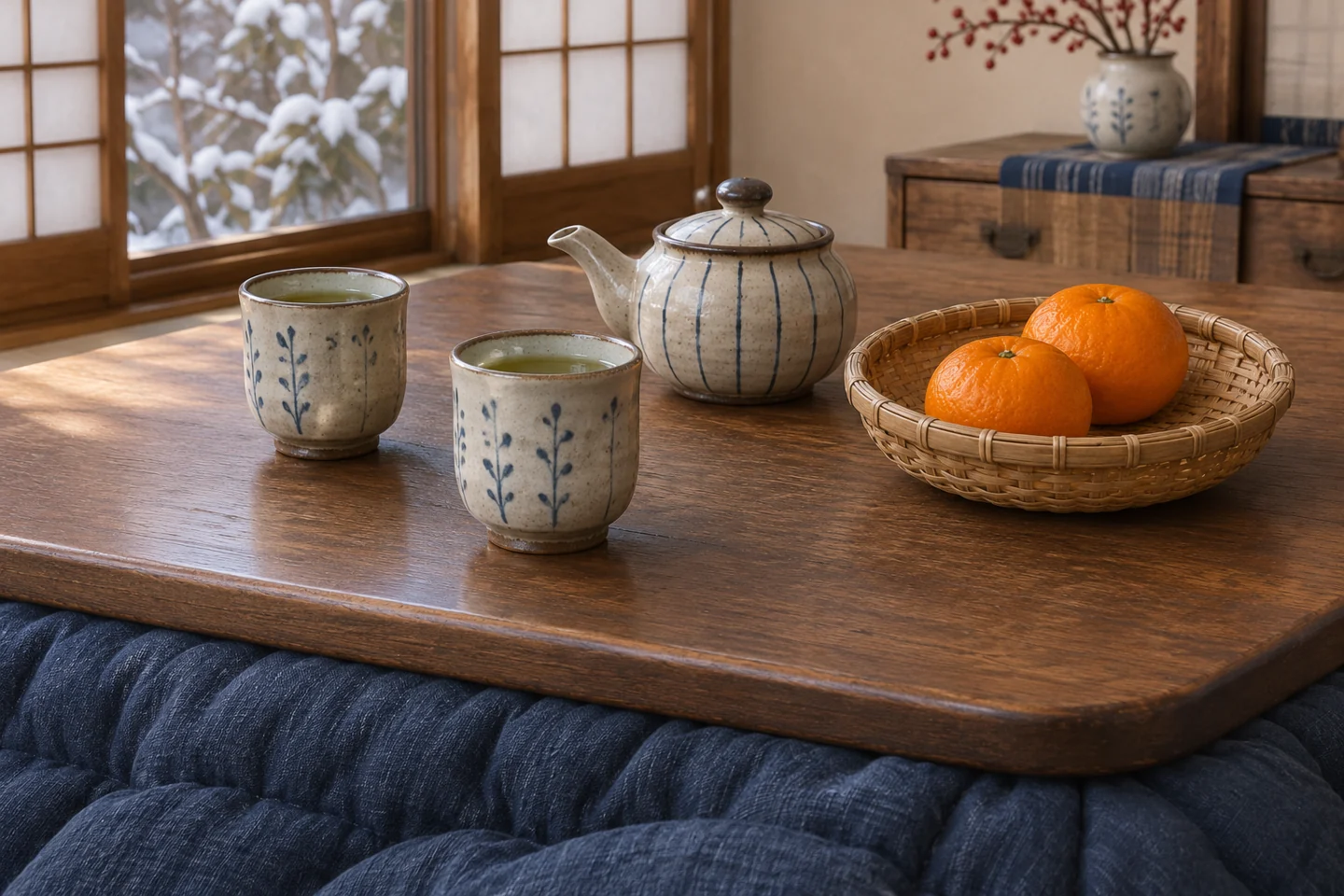
Try keeping the tabletop simple: a small tray for the teapot and cups, a bowl of fruit and a little dish for the peel. Leave enough clear surface to set a cup down without reaching across someone else. Our guide to using Japanese small plates has more ideas for giving small dishes a useful everyday role.
The quilt is a furnishing as well as part of the heating arrangement. Before buying, consider the space it will occupy when spread out, not only the dimensions of the wooden top. Ask how it should be cleaned and stored, and check that the table, heater and quilt are intended to work together.
Can you use a Japanese kotatsu overseas?
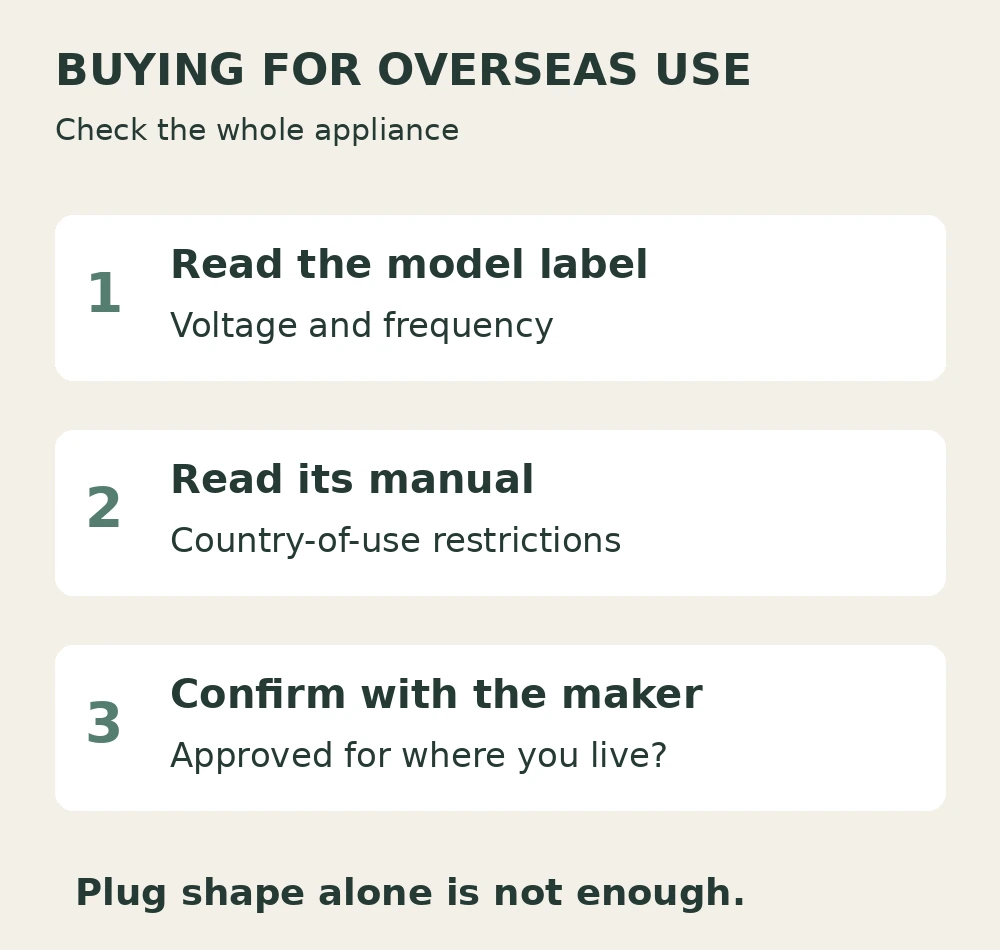
Do not assume so. A Japanese plug fitting a socket does not establish electrical compatibility. Metro’s manufacturer FAQ lists 100 V, 50–60 Hz for its heaters and states that its products are for use in Japan. It also warns against fitting a replacement heater to a table that has not undergone the relevant safety testing.
Check the exact model’s voltage, frequency and permitted country of use before ordering. For example, the Koizumi KMR-42251 manual specifies AC 100 V and Japan-only use. A travel plug adapter does not change the supply voltage, and a transformer should not be treated as permission to ignore a Japan-only instruction. Choose an appliance whose manufacturer expressly supports its use where you live.
Keep the warmth comfortable and the heater clear
Japan’s product-safety agency NITE advises against drying clothes inside a kotatsu or letting bedding and cushions touch the heater. It also warns against sleeping with the kotatsu switched on. Prolonged warmth can cause low-temperature burns, even when it does not initially feel fiercely hot.
Follow the model’s manual for clearances, airflow and temperature settings; do not push spare bedding into the space around the heater. Use the specified cord arrangement, keep cables from being trapped under furniture, and switch off and unplug when it is not in use. The Koizumi manual gives model-specific instructions on these points. An electric kotatsu does not require you to add any fuel-burning heat source underneath it.
Try one during a winter visit
If you would rather experience a kotatsu before considering one for home, look for accommodation or a seasonal café that specifically advertises it. Ask whether the room has low floor seating or a higher version with chairs. Availability is a seasonal detail worth confirming directly rather than assuming from an old photograph.
There are unusual versions too. JNTO describes winter kotatsu boats in Yanagawa, Fukuoka, where the idea accompanies a canal outing. Check the operator’s current season, booking arrangements and weather conditions before travelling.
You do not need to recreate an entire Japanese room to understand the appeal. Sit down, find a comfortable position and leave a little room for another cup. The quilt gives the table a purpose that a bare top cannot quite offer: a reason to stay together for the length of a winter tea break.
Room and tea scenes: AI-generated illustrations of a typical setting. Diagrams: KURASHiNO和 JOURNAL. They do not depict or endorse a specific product. Safety information checked against the linked manufacturer and NITE material on November 7, 2026; the supplied product manual takes priority.