Outside a noodle shop, a short blue curtain moves as someone steps through it. It does not cover the whole doorway. It may not even hide much of the room. Yet it tells you that you have reached a particular kind of threshold.
This is a noren: a hanging cloth divider that can provide shade, privacy and a shop’s identity. At many Japanese restaurants, putting it out also marks the start of business. Knowing how to read it makes a walk down a shopping street more interesting—and a first visit a little less uncertain.
A curtain designed to let people through
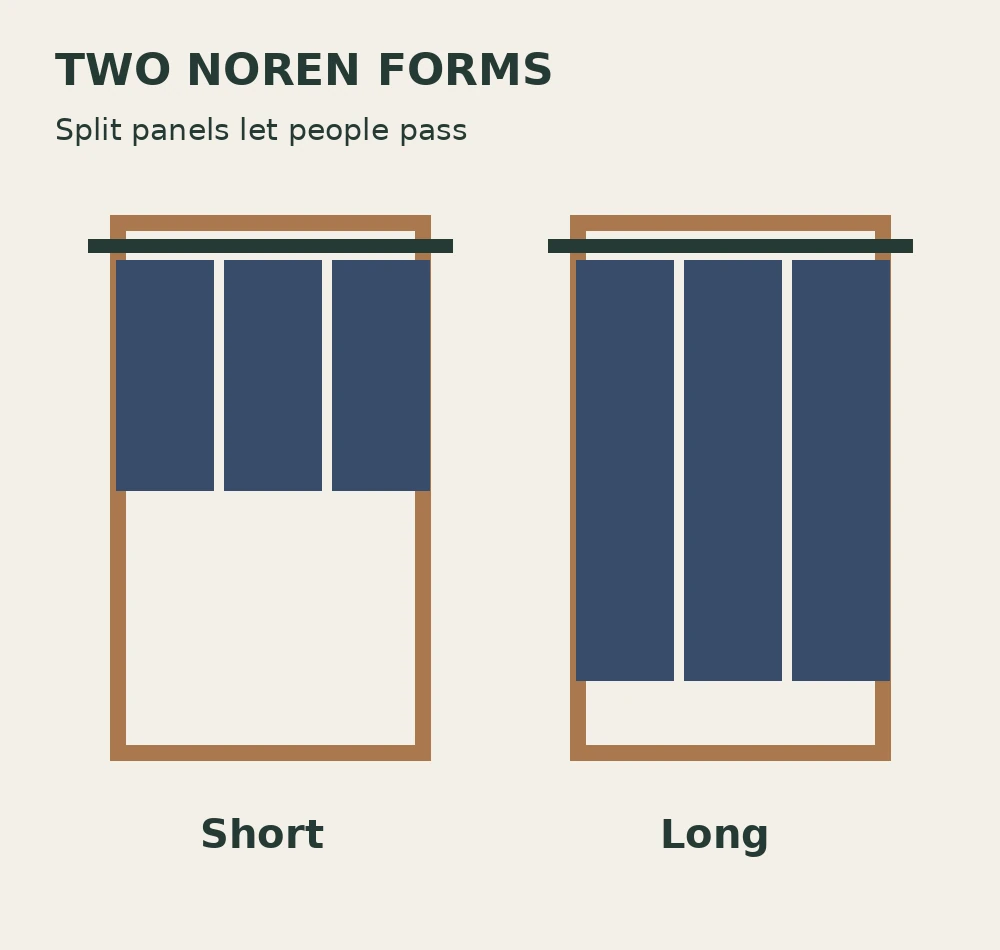
Look at the construction before the lettering. Many noren are divided vertically into panels, joined at the top and separated below. A pole supports the upper edge. The splits let people pass without gathering a whole curtain to one side.
The fabric creates a partial boundary. It can screen the interior from the street while leaving an entrance usable. A short noren and a long one therefore change the doorway differently: one mainly occupies the space above your head, while another asks you to part the cloth as you enter. There are also cord-like versions, rather than a continuous sheet of fabric.
Does a noren mean the restaurant is open?
Often, yes. Hanging it out for business and taking it inside at closing is an established custom. The JAANUS architecture dictionary describes the association between a noren at an open entrance and a shop being open. That makes it a useful clue, especially at a small restaurant whose doorway otherwise looks quite understated.
It remains a clue, not a guarantee. Some curtains are permanent decoration; some restaurants use different signs; some businesses have no noren at all. A hanging curtain cannot tell you whether the kitchen has just taken its last order.
Read the whole entrance
Before stepping in, check the posted hours, any last-order time and signs beside the door. 営業中 means open for business; 準備中 means preparing, and is commonly displayed when a restaurant is not serving. If a queue has formed or a notice explains how to register your name, follow that system rather than passing through the curtain immediately.
When the signs and the curtain seem to disagree, ask a member of staff. “Are you open?” is a perfectly sensible question. Treating a custom as a helpful extra signal works better than trying to turn it into a rule that every doorway must obey.
How a piece of cloth became a shop’s name
JAANUS traces noren’s particular association with urban machiya, or townhouses, to the late Kamakura period. Alongside their practical uses, they developed into signs carrying a shop name, trademark or crest. The exact beginning of hanging cloth at a doorway is a different question from the later history of this familiar shop sign.
Think about what the cloth does at street level. It places a name directly above the route a customer takes into the business. The shopkeeper brings it out, the customer passes beneath it, and the same image becomes familiar through repetition. It is easy to understand why that object could come to stand for the business itself.
That association becomes especially easy to grasp when lettering or a simple emblem can be recognised before you can read every character. Even if the written name is unfamiliar, the placement of the design tells you where to look when you return. The curtain is part of the encounter with a shop, not just something obscuring the entrance.
Look beyond the familiar indigo blue
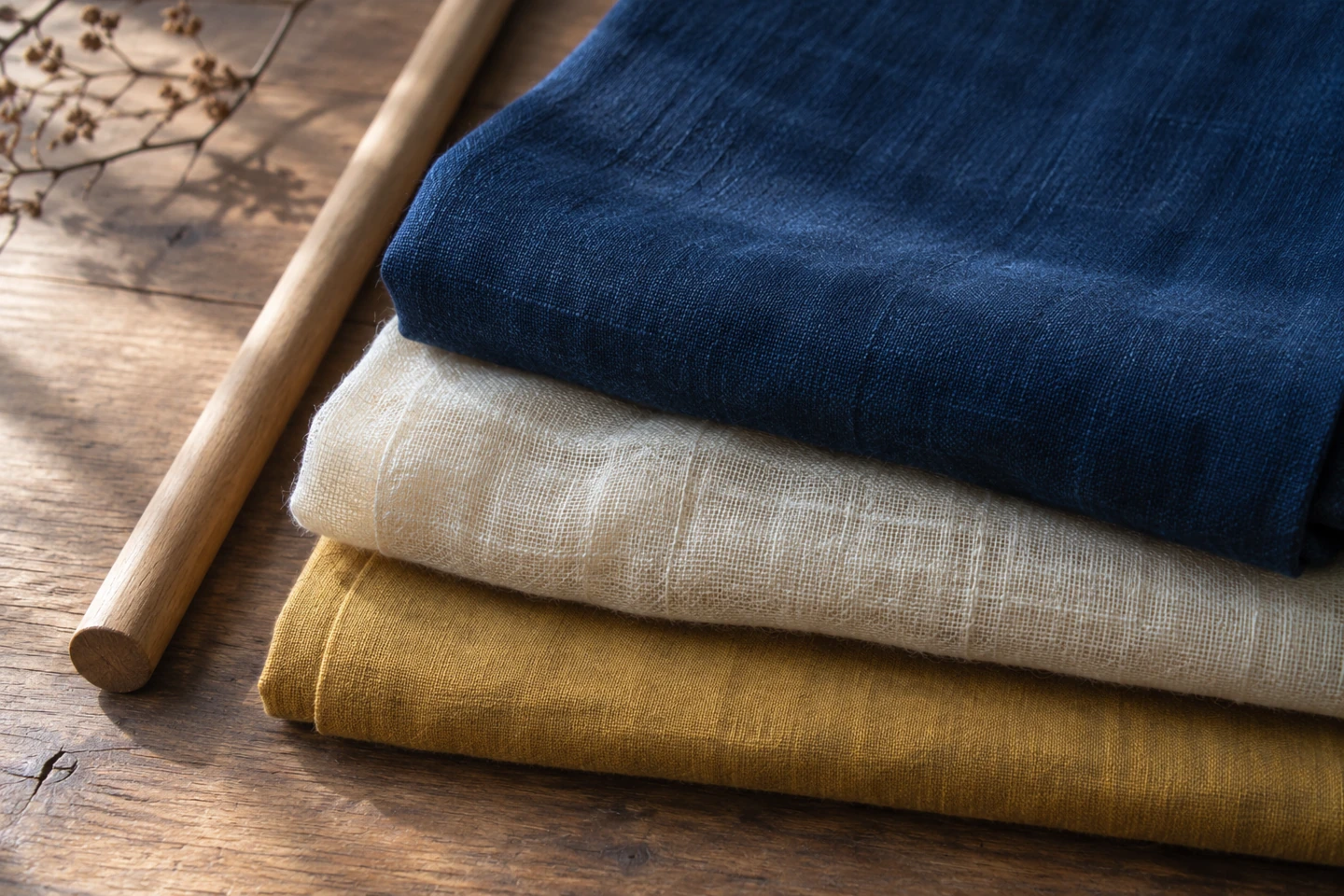
Dark blue and white are an immediately recognisable combination, but noren do not follow one universal colour code. Cotton, hemp and other fabrics give them different textures; length, weave and dyeing method change their appearance too. A pale open weave reads differently from a dense, dark cloth even before a design is added.
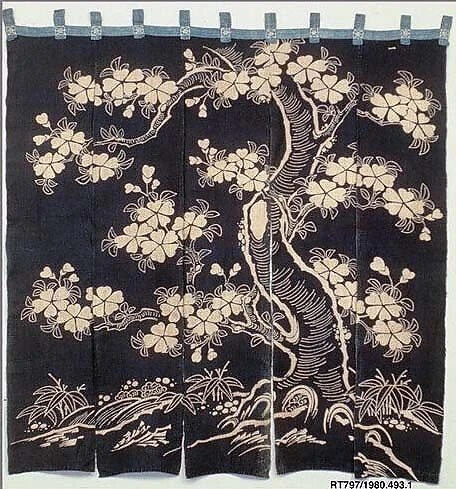
A historical example makes those choices tangible. The Metropolitan Museum of Art holds a nineteenth-century Japanese noren with a flowering cherry tree, made from indigo-dyed hemp. The tree stretches over the fabric rather than sitting inside a small badge or logo.
The museum identifies its technique as tsutsugaki, or tube drawing. Rice paste is applied to resist the dye; the protected areas remain light as the surrounding cloth is dyed. Here the result is a branch and blossom design that reads across the panels. The object is not currently on view, but its open-access image allows a close look online.
What to notice on your next walk
Choose a short shopping street and look at three entrances. Where does each curtain stop? Is the design a name, a crest or a picture? Does the cloth shade the door, screen a seated customer or simply announce the shop? You do not need to identify the dyeing technique to begin noticing these differences.
Noren also appear beyond restaurants, including public baths and shops. Inside a building, they can divide spaces. Their presence alone does not tell you that a doorway is a public entrance: a curtain at the back of a restaurant may lead to a kitchen or staff area. Follow the signs and the layout.
Passing through without ceremony
At the customer entrance, part a split panel gently with your hand if you need to, step through and let it fall back. There is no special ritual to perform. Avoid pulling on the rod or holding the fabric aside for a long photograph while other people are trying to enter.
The next time you see a noren, pause long enough to notice its working details: the opening below it, the weight of the cloth, the name above your path. What looked like a decorative curtain becomes something more specific—a shop making its presence felt at the edge of the street.
Featured entrance and textile study: AI-generated illustrations, not photographs of an actual restaurant or workshop. Historical textile image: The Metropolitan Museum of Art, public domain. Diagram: KURASHiNO和 JOURNAL. Information checked November 7, 2026.